AI Adoption: A People Challenge
AI adoption isn’t just a technology challenge. It’s a people challenge.
AI is quickly moving beyond experimentation and becoming part of everyday work.
Australian organisations are using AI to automate routine work, analyse information, support decision-making and find new ways to improve customer and employee experiences. In June 2025, the Australian Government reported that 41% of Australian small and medium enterprises were adopting AI, with 22% reporting improvements in decision-making speed and 18% reporting improved productivity.
But having AI tools is not the same as adopting AI successfully.
Technology can be rolled out relatively quickly. Helping people change how they work, make decisions and trust the systems around them is much harder.
As organisations move from small AI experiments to broader adoption, the question is shifting from:
“What can AI do?”
To:
“How do we ensure our people can use it confidently, responsibly and effectively?”
The answer may determine which organisations turn AI investment into lasting business value.
Trust is now a Business Issue
For leaders, trust in AI is not an abstract ethical issue. It shapes whether employees use new tools, whether customers feel comfortable with AI-enabled services and whether organisations can scale AI responsibly.
In Australia, the trust challenge is significant.
The Office of the Australian Information Commissioner’s 2026 Australian Community Attitudes to Privacy Survey found that 87% of Australians are more concerned about privacy than they were five years ago. Just 4% said they trusted AI companies, while 68% said they would be more likely to use digital services requiring personal information if they knew their data was handled fairly and responsibly.
For organisations introducing AI, that matters.
Simply telling employees or customers that an AI system is secure is no longer enough. People want to know what information is being used, what the technology does with it, where human judgement comes in and who is accountable when something goes wrong.
Transparency cannot be added at the end of an AI project. It needs to be designed in from the start.
Successful AI Adoption Starts with the Workforce
Skills are another important part of the challenge.
The World Economic Forum's Future of Jobs Report 2025, based on input from more than 1,000 employers representing more than 14 million workers, found that employers expect 39% of workers' core skills to change by 2030.
AI and big data, cybersecurity and technological literacy are expected to be among the fastest-growing skills. But the report also points towards the continuing importance of human capabilities such as creative thinking, resilience, flexibility and agility.
That balance matters.
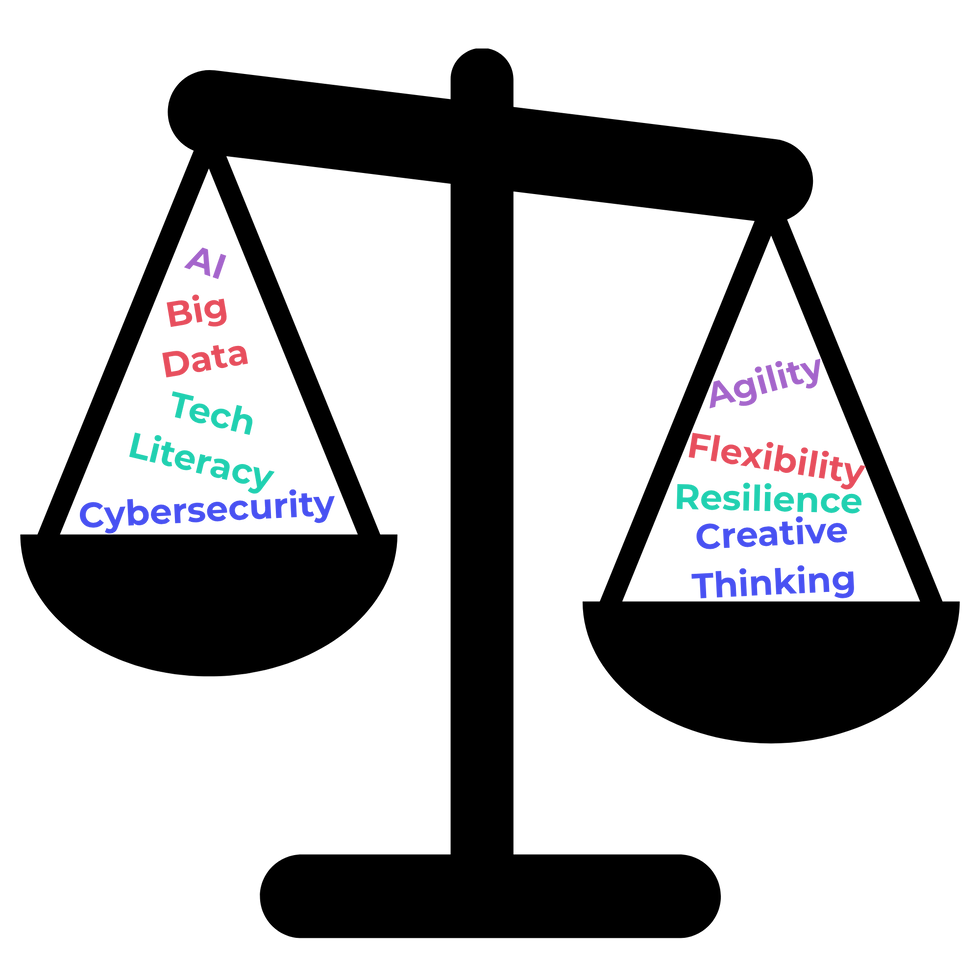
The goal is not simply to teach everyone how to use the latest AI tool. People also need to know when AI is useful, when to question it and when human judgement should take the lead.
Australia's Future Skills Organisation reached a similar conclusion at its 2026 National AI Skills Forum: most organisations already have access to AI technology, but the differentiator is whether workers, leaders and teams have the capability to apply it effectively. It specifically highlighted judgement, workplace-based learning, leadership and trust as important elements of successful adoption.
In other words, AI adoption is a change and capability challenge - not simply an IT implementation.
Governance Shouldn't be the Brake on AI Innovation
Governance is sometimes seen as the part of AI adoption that slows everything down. Done well, it can do the opposite.
Clear guardrails can give employees the confidence to experiment. They know which tools they can use, what information they can share and when they need to escalate or involve a person.
Research from Deloitte back in 2024, provided an interesting indication of the relationship between governance and adoption. It covered almost 900 senior leaders and found that organisations with stronger AI governance had 28% more staff using AI solutions, while 45% of organisations identified improved reputation among customers as a benefit associated with trustworthy AI. Deloitte also found a significant preparedness gap: 23% of leaders considered themselves highly prepared to manage AI risks, yet only 9% were assessed as having a "Ready" level of governance.
That distinction matters.
Governance does not have to mean layers of policy around every AI interaction. It means giving people enough structure to understand where responsibility sits and make informed decisions.
The Australian Government's current Guidance for AI Adoption reflects this approach. Its six essential responsible-AI practices include establishing accountability, understanding impacts, managing risk, sharing essential information, testing and monitoring systems, and maintaining human control.
Responsible AI is not separate from successful adoption. It is one of the foundations that makes adoption possible.
Don't Overlook the Foundations Beneath AI
It is tempting to think AI readiness is mostly about technology. In reality, an AI solution is only as useful as the environment around it.
Poor-quality or fragmented data does not become trustworthy just because AI is analysing it. An unclear process does not become effective simply because it has been automated. And another technology platform will not fix uncertainty about ownership or decision-making.
That is why organisations need to look beyond the tool and consider the wider operating environment.
At Solentive, our approach to AI readiness considers foundations including data quality, governance, security, skills, change management and organisational culture.
It starts with the business problem, not the technology.
Where is work genuinely being slowed down?
Where are teams repeatedly completing manual tasks?
Where is information difficult to access or trust?
Where could better decision support make a measurable difference?
And, importantly, are the people who will ultimately use the solution involved early enough to shape it?
These questions can uncover opportunities that a simple “Where can we use AI?” will miss.
AI Creates Value when you Bring People with you
AI capabilities will keep improving. The harder task will be turning them into something employees, customers and leaders genuinely trust and use.
That takes more than buying the right platform.
Leaders need to be clear about why AI is being introduced. Organisations need trusted data, clear accountability, and security and governance that match the risk. Employees also need the knowledge and confidence to recognise where AI can help - and where their own judgement remains essential.
Australia's National AI Plan takes a similarly broad view. Its goals include increasing AI adoption and training Australian workers while also maintaining safety through regulatory frameworks and responsible practices.
The organisations that get this right will not necessarily be the ones that implement the most AI or move the fastest.
They will be the ones that connect technology to a real business need, put the right foundations in place and bring their people with them.
Ultimately, successful AI transformation is not about replacing human capability.
It is about creating an environment where people can use new capabilities to make better decisions and do better work.
Is your organisation ready to move beyond AI experiments and make adoption meaningful?
Before investing in the next AI initiative, take a step back. Are your people, processes, data and governance ready to support it?
Solentive helps organisations find where AI can create real business value, understand the foundations needed to support it and build a practical path to responsible adoption.
Talk to us about where your organisation is today - and what needs to be in place before you take the next step.


Comments